Kurmanji and Sorani: one language, two scripts
Kurdish is written in two main ways. Kurmanji, the most widely spoken variety, is mostly written in Latin letters, the Hawar alphabet that Celadet Bedirxan published in 1932. Sorani is written in an Arabic-based script, from right to left. Here is where each is spoken, how the two scripts line up, and a first, gentle try at reading both.
Kurmanji and Sorani: two varieties, one family
Kurdish is a family of closely related varieties. The two you will meet first are Kurmanji, also called Northern Kurdish, and Sorani, also called Central Kurdish. There are others, such as Southern Kurdish, and linguists still debate whether to call them dialects of one language or languages of their own. This site teaches Kurmanji and Sorani side by side.
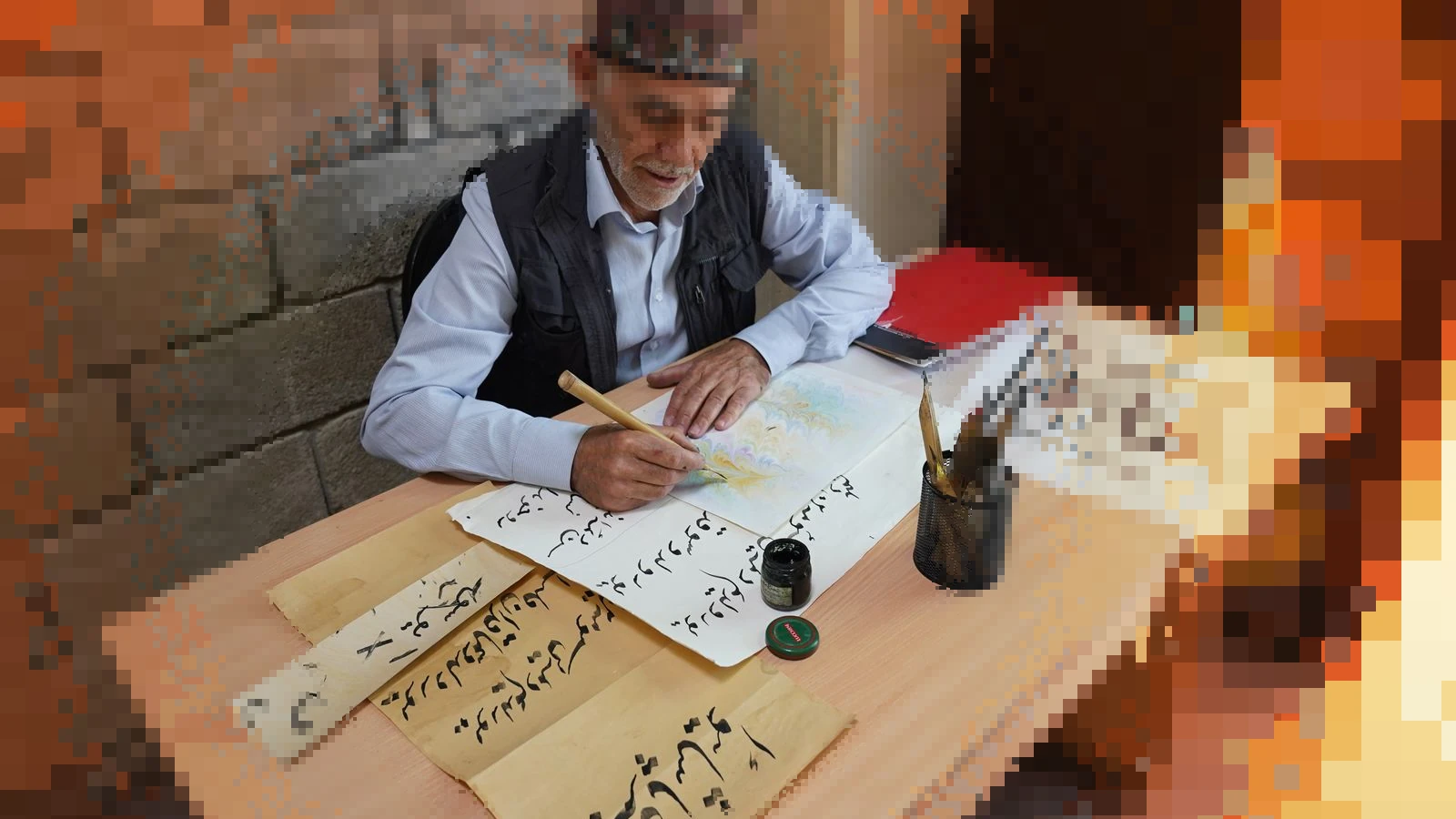
Kurmanji is the most widely spoken form of Kurdish. You hear it across southeastern Turkey, northern Syria, the Duhok province of the Kurdistan Region of Iraq, parts of northwestern and northeastern Iran, and in Armenia and the Caucasus.
Sorani is spoken in the Kurdistan Region of Iraq, in cities such as Erbil and Sulaymaniyah, and in western Iran, in the provinces of Kurdistan, Kermanshah and West Azerbaijan. Its written standard grew out of the speech of Sulaymaniyah. In Iraq, Kurdish is one of the two official languages of the country, alongside Arabic.
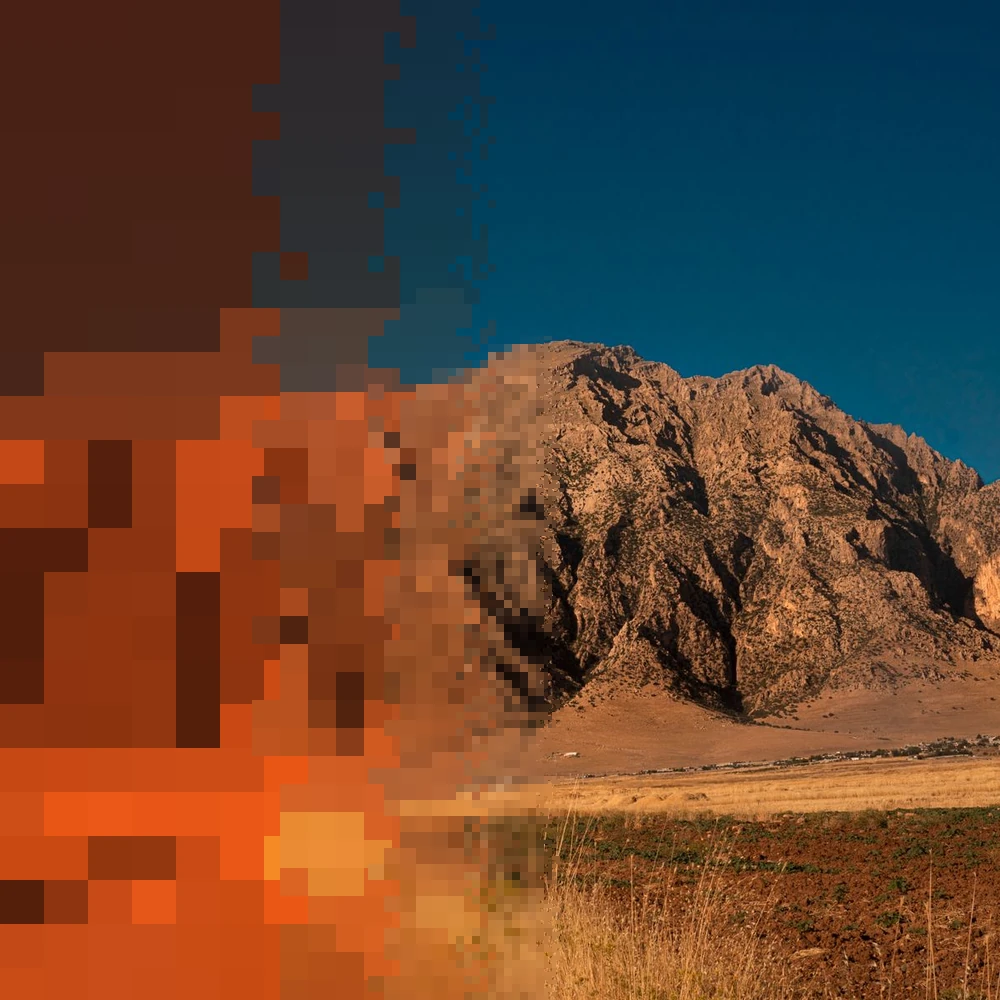
Many basic words are shared: a mountain is çiya in both, bread is nan. Others differ: a friend is heval in Kurmanji but هاوڕێ, hawrrê, in Sorani. The most visible difference, though, is on the page.
Kurmanji in Latin letters
Celadet Bedirxan and the Hawar alphabet
On 15 May 1932, in Damascus, Celadet Alî Bedirxan published the first issue of Hawar, a Kurdish magazine whose name means “the cry”. It ran until 1943, and its pages spread a new way of writing Kurmanji in Latin letters.
Bedirxan worked to a clear rule: every sound gets its own letter, and no sound needs two. He also built the alphabet with the Kurds of Turkey in mind, who had already learned the Turkish Latin alphabet. The result is the 31 letters below, the 26 you know from English plus five with marks.
- Aa
- Bb
- Cc
- Çç
- Dd
- Ee
- Êê
- Ff
- Gg
- Hh
- Ii
- Îî
- Jj
- Kk
- Ll
- Mm
- Nn
- Oo
- Pp
- Rr
- Ss
- Şş
- Tt
- Uu
- Ûû
- Vv
- Ww
- Xx
- Yy
- Zz
The five letters English does not have: Ç, Ê, Î, Ş and Û.
Today Kurmanji is written this way in Turkey and Syria. In the former Soviet Union it was also written in Cyrillic, and in Duhok, in Iraq, Kurmanji is usually written in the same Arabic-based script as Sorani.
The sounds to learn first
Most letters sound just as you would guess, and every letter is always said. These are the ones that surprise English speakers:
| Letter | Sounds like | Example |
|---|---|---|
| c | j in “jam” | cejn, holiday |
| ç | ch in “chair” | çay, tea |
| e | e in “bed” | heval, friend |
| ê | e in “café” | sê, three |
| i | a short, light i, as in “bit” | dil, heart |
| î | ee in “see” | şîn, blue |
| j | s in “pleasure” | roj, day |
| ş | sh in “ship” | şeş, six |
| û | oo in “moon” | nû, new |
| x | ch in Scottish “loch” | xêr, goodness |
Sorani in the Arabic-based script
Right to left
Sorani is written in a modified form of the Arabic script, the same family of letters Persian uses, with extra letters for Kurdish sounds. This alphabet took shape in the 1920s. It is usually counted as 33 letters, or 34 if you count the double وو as a letter of its own, and it is how Kurds in Iran write Sorani too.
It runs from right to left, and most letters join the next one in a word, changing shape as they do. A few, such as ا, د, ر and و, never join the letter after them, which leaves small gaps inside words. Those gaps are not spaces; the word carries on.
Vowels you can see
Here is the good news. Arabic usually leaves its short vowels unwritten. Sorani writes almost all of its vowels as full letters: ا for a, ە for e, ێ for ê, ی for î, ۆ for o, و for u and وو for û. Only one, the short, light i, is left out, and you learn to hear where it goes.
Two more habits. A word may not start with a bare vowel, so a silent ئ goes in front, as in ئاو, water. And some letters carry small marks that Arabic does not use, made for Kurdish sounds: ڕ is a rolled r, ڵ is a heavy l, ۆ is o and ێ is ê.
How the two scripts map onto each other
Because both scripts write their vowels, the Hawar letters and the Sorani letters line up almost one to one. When Sorani is written in Latin letters it uses the same alphabet, with ll for ڵ and rr for ڕ. Here is the whole map:
- aا
- bب
- cج
- çچ
- dد
- eە
- êێ
- fف
- gگ
- hهalso ح
- inot written
- îیalso y
- jژ
- kک
- lل
- llڵheavy l
- mم
- nن
- oۆ
- pپ
- qق
- rر
- rrڕrolled r
- sس
- şش
- tت
- uوalso w
- ûوو
- vڤ
- wوalso u
- xخalso غ
- yیalso î
- zز
Three things to notice. One Latin letter can match two Sorani ones: h is ه or ح, x is خ or غ. One Sorani letter can stand for two Latin ones: و is u or w, ی is î or y, and the word tells you which. And the short i has no letter at all.
A few words side by side
Here are the first words on this site in both varieties. The last column spells the Sorani in Latin letters, using the map above.
| English | Kurmanji | Sorani | Sorani in Latin |
|---|---|---|---|
| hello | silav | سڵاو | sillaw |
| thanks | spas | سوپاس | supas |
| mountain | çiya same | چیا | çiya |
| water | av | ئاو | aw |
| bread | nan same | نان | nan |
| sun, day | roj | ڕۆژ | rroj |
| home | mal | ماڵ | mall |
| friend | heval | هاوڕێ | hawrrê |
| tea | çay | چا | ça |
| Kurdish | kurdî same | کوردی | kurdî |
Some words are the same in both. Some differ by a sound: sometimes a Kurmanji v is a Sorani w, as in av and aw, silav and sillaw. And a few are different words altogether, like heval and hawrrê.
Reading both: a gentle first try
Time to read. Take three Sorani words one letter at a time. Start at the right and move left.
- سs
- inot written
- ڵll
- اa
- وw
- ئsilent
- اa
- وw
- مm
- اa
- ڵll
Now go the other way. This site’s motto in Kurmanji is Fêrî kurdî bibe, learn Kurdish. In Sorani it is فێری کوردی ببە. Match them letter by letter: فێری is f, ê, r, î, so fêrî in both. کوردی is k, u, r, d, î, kurdî. And ببە is b, b, e, read bibe, with the quiet i left out once more.
Words from this article
The words you just read, in both scripts. Cover one column and read the other out loud.
| Kurmanji | Sorani | English |
|---|---|---|
| kurdî | کوردی | Kurdish |
| silav | سڵاو | hello |
| spas | سوپاس | thanks |
| çiya | چیا | mountain |
| av | ئاو | water |
| nan | نان | bread |
| roj | ڕۆژ | sun, day |
| mal | ماڵ | home |
| heval | هاوڕێ | friend |
| çay | چا | tea |
| Fêrî kurdî bibe | فێری کوردی ببە | learn Kurdish |