Newroz: the Kurdish New Year, its fire and its words
Newroz is the Kurdish New Year. It falls at the spring equinox and Kurds keep it on 21 March, with the fires lit the evening before: bonfires on the hills, young people leaping over the flames, then a day of dancing, picnics and best clothes. Here is the legend behind the fire, how the day is kept, and the words you will hear around it.
What Newroz is
Newroz is the first day of spring and the first day of the Kurdish year. The name means “new day”, and you can hear both halves in everyday Kurdish: nû is new and roj is day. In Sorani it is written نەورۆز, and the same two parts are there too, نوێ for new and ڕۆژ for day. When someone wishes you a happy Newroz, they are wishing you a happy new day.
Kurds share the festival with many neighbours. Iranians, Afghans, Azerbaijanis, Tajiks and others keep it as Nowruz. In 2009 UNESCO added Nowruz to its list of the intangible cultural heritage of humanity, on a joint nomination that today includes Iraq, Iran and Turkey, and in 2010 the United Nations General Assembly named 21 March the International Day of Nowruz.
For Kurds, Newroz also turns the page of their own calendar. Its first month, Xakelêwe, begins on Newroz, and Newroz in March 2026 opened the Kurdish year 2726.
- Evening of 20 MarchThe firesBonfires and torches are lit across the Kurdish regions of Iraq, Iran, Turkey and Syria.
- 21 MarchThe new dayFamilies head out to the hills to picnic and dance, many of them in traditional clothes.
- The year turnsXakelêwe beginsThe first month of the Kurdish calendar. Newroz 2026 opened the year 2726.
The legend of Kawa the blacksmith
Behind the fire is a story that Kurds retell every spring. Details change from one teller to the next, but the bones are always the same: a tyrant, a blacksmith, and a fire on the hills.
A king with serpents on his shoulders
Long ago, the story goes, a cruel king called Zahhak ruled the land. Kurds often call him Dehak. Two serpents grew from his shoulders, and every day they had to be fed with the brains of two young people. While he ruled, spring stopped coming, and the land stayed locked in winter.
The man who prepared those meals could not bear it. Each day he spared one of the two, mixed a sheep’s brain into the dish in its place, and sent the young person away to hide in the mountains. In the Kurdish telling, the young people saved this way are the ancestors of the Kurds.
The hammer and the hilltop fires
Kawa was a blacksmith, a hesinkar in Kurmanji, and in Sorani he is کاوەی ئاسنگەر, Kawa the blacksmith. The king had taken his children. Kawa gathered the young people from the mountains, trained them, and led them against the castle, where he struck Dehak down with his hammer.
To spread the news he lit fires on the hillsides, and everyone who saw them came down from the mountains to celebrate. The next day, spring came back. That is why the fire comes first at Newroz: it is the signal that the long winter, and the tyrant who kept it, are over.
An older telling
The story is old, and it is not only Kurdish. The Persian poet Ferdowsi tells it in the Shahnameh, the Book of Kings, which he finished around the year 1010. In his version the blacksmith Kaveh raises his leather apron on a spear as a banner, and the uprising brings a prince, Fereydun, to the throne. Many Kurdish tellings leave the prince out and keep the blacksmith at the centre.
In the 1930s, Kurdish poets began to tie Kawa’s story closely to Newroz, and since then the fire has stood for freedom as much as for spring.
How Kurds celebrate Newroz
Customs change from valley to valley and from city to village, but a Newroz almost anywhere has the same four ingredients: fire, a jump, a dance and a day outdoors.
Fires on the evening of 20 March
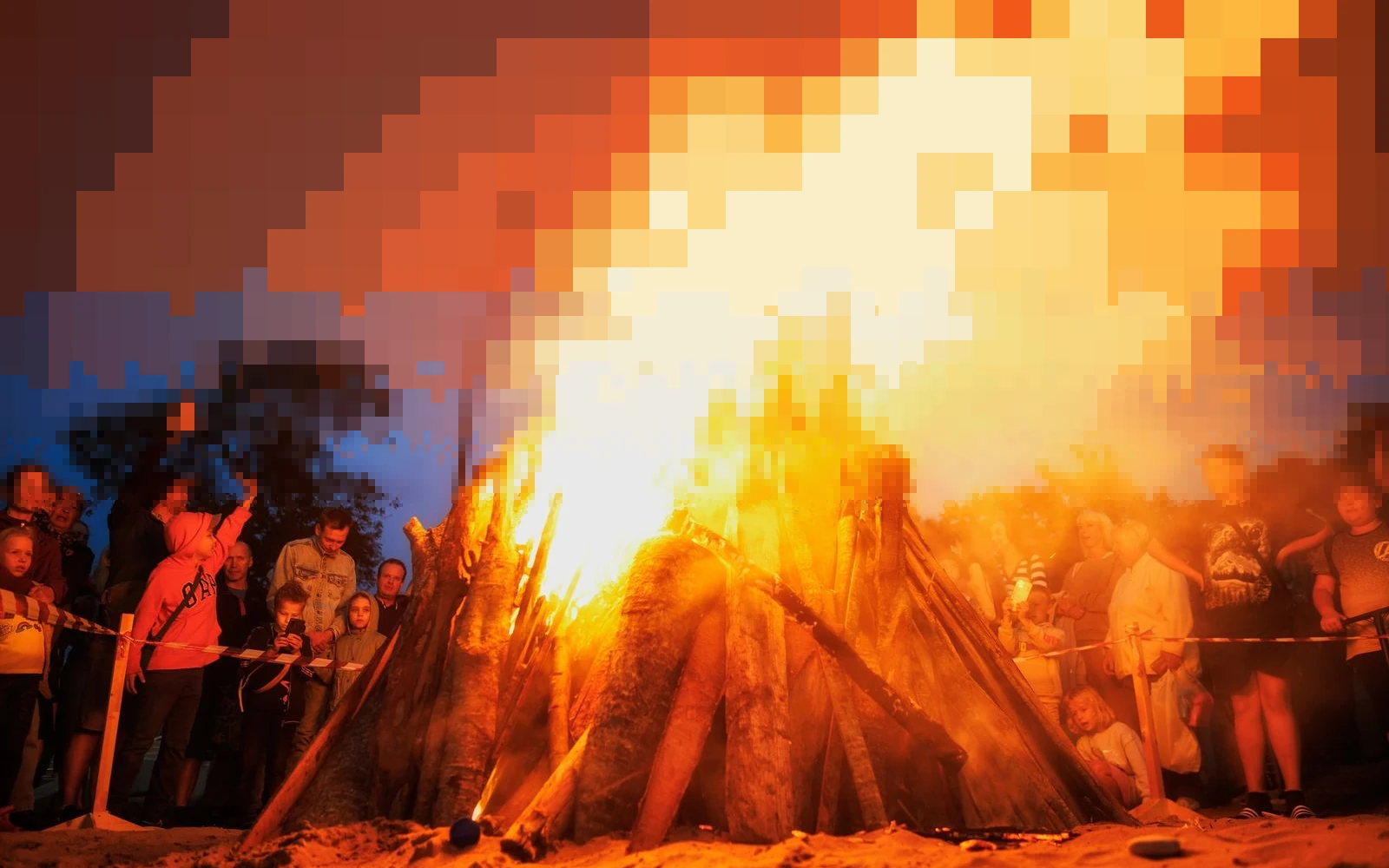
On the evening before Newroz, fires are lit across the Kurdish regions of Iraq, Iran, Turkey and Syria, from small fires in a street or a yard to great bonfires on a hill above the town.
The best known are in Akre, also written Aqrah, a mountain town in the Duhok province of the Kurdistan Region of Iraq that is often called the capital of Newroz. As night falls, young people carry burning torches up the slopes above the town and light a bonfire at the top. The organisers like to match the torches to the calendar: in 2023 they prepared 2,723 torches, one for every year.
Jumping over the fire
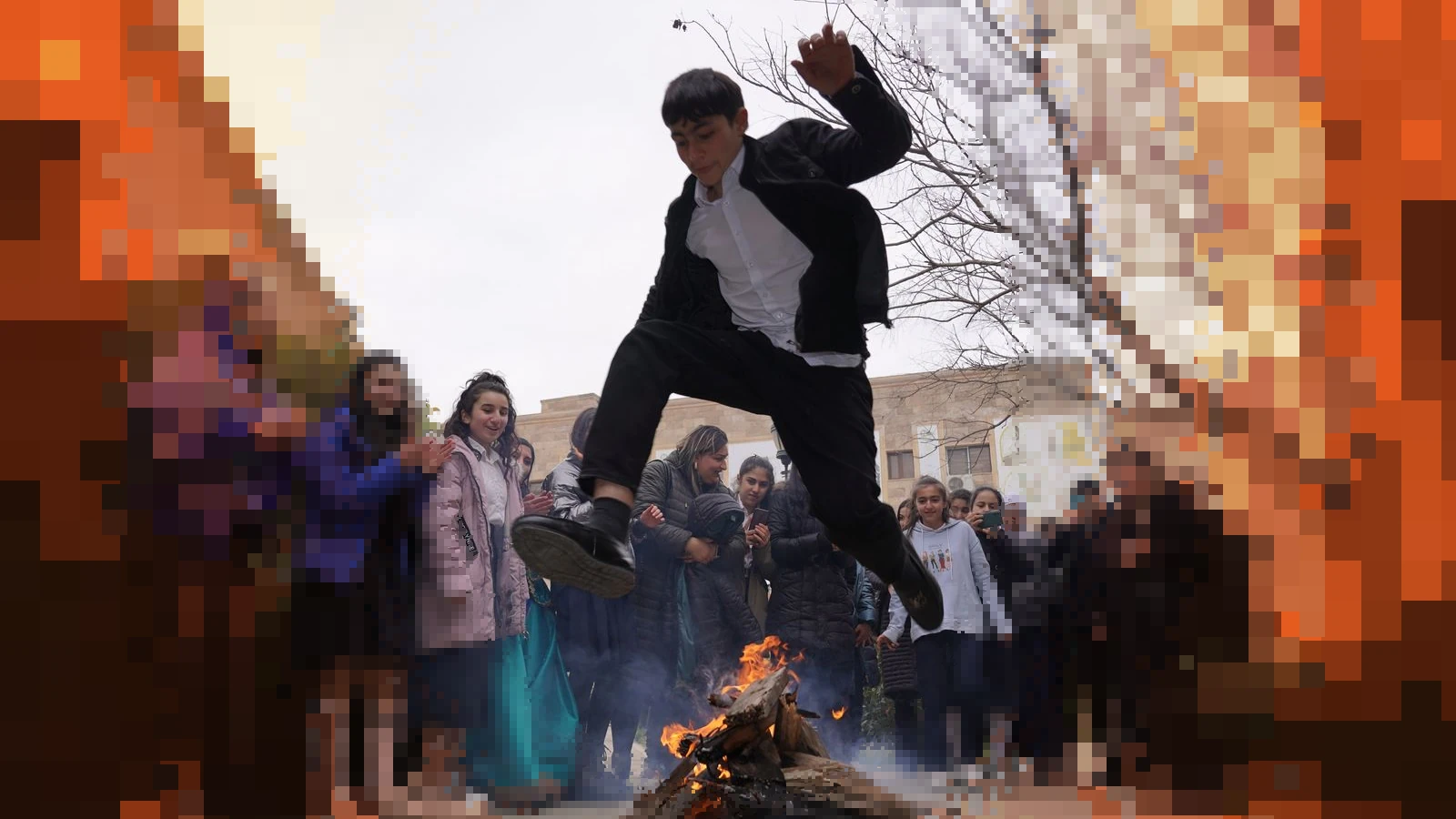
Where the fire is small enough, people jump over it. One at a time: a short run, a leap, and a cheer from everyone watching, just like the photo at the top of this page. Like the bonfires on the hills, the little fire in the street says the same thing: winter is behind us.
If you are invited to try, jump only over a small, low fire. The big bonfires are for looking at.
Govend: dancing in a line
Then comes the dancing. Kurdish dance is a group dance: a long line or an open circle of people holding hands or linking arms, shoulder to shoulder, stepping in time. In Kurmanji it is called govend, and you will also hear dîlan. In Sorani it is هەڵپەڕکێ, halparke. Men and women dance in the same line, which sets Kurdish dance apart from that of some neighbours.
At the head of the line the leader, the sergovend in Kurmanji or سەرچۆپی, serçopî, in Sorani, often waves a bright handkerchief and sets the pace, usually to a big drum and a zurna, a loud double reed pipe. If someone pulls you into the line, take the hand you are offered, watch the feet of the person next to you, and copy. Nobody expects a beginner to know the steps.
Picnics, clothes and songs
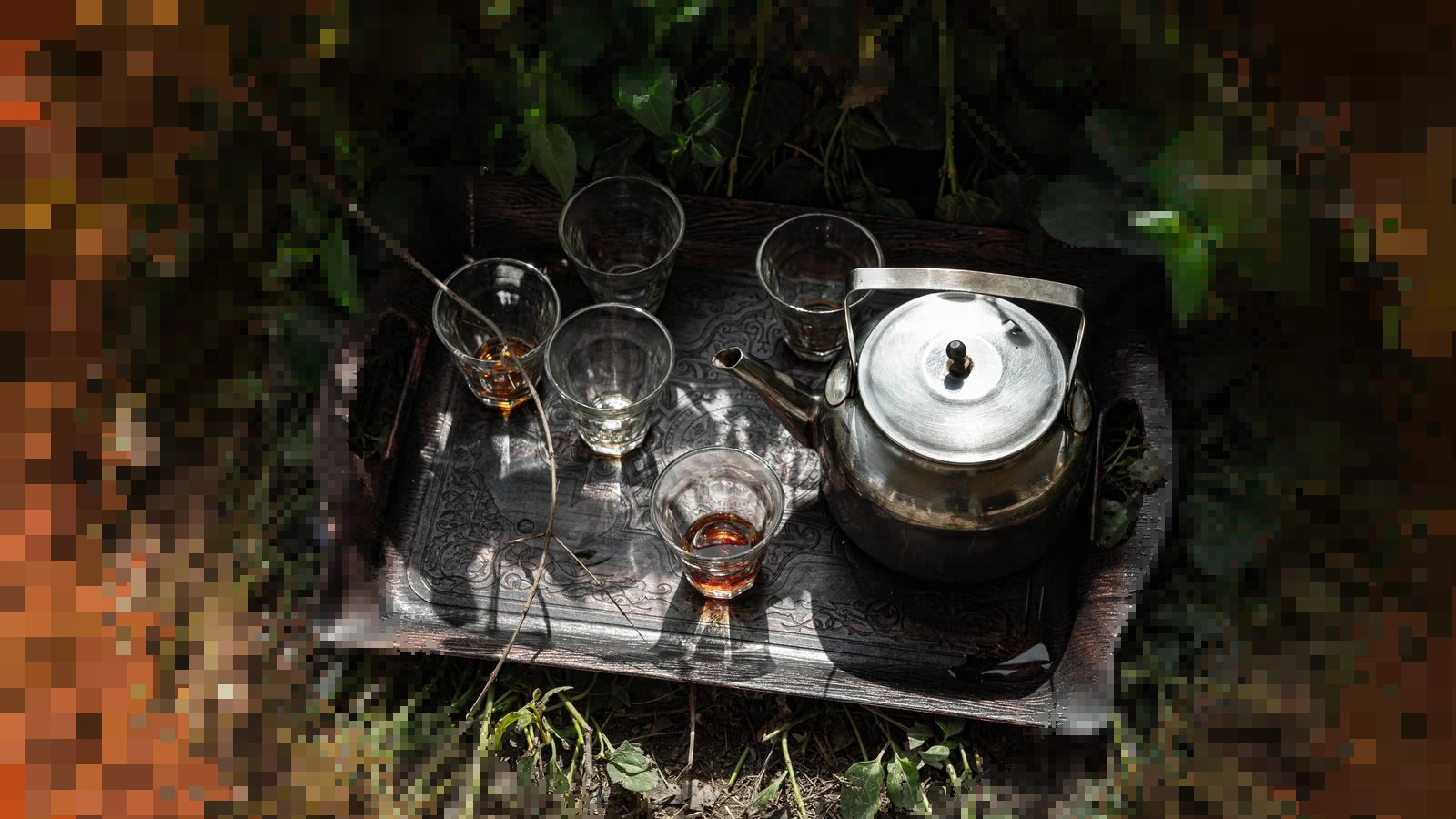
On Newroz day and the days after, families pack food and head out to the hills and the countryside. A picnic can last all day: meat grilled over a fire around lunchtime, bread, vegetables and fruit, music and dancing on the picnic blanket, and tea to finish. (If you are a guest at one, read Tea first, then talk before you go.)
Many people wear traditional Kurdish clothes for the day. Women wear long dresses in bright, often sequined fabric; men wear a jacket and wide trousers with a broad sash tied around the waist, like the outfit below.
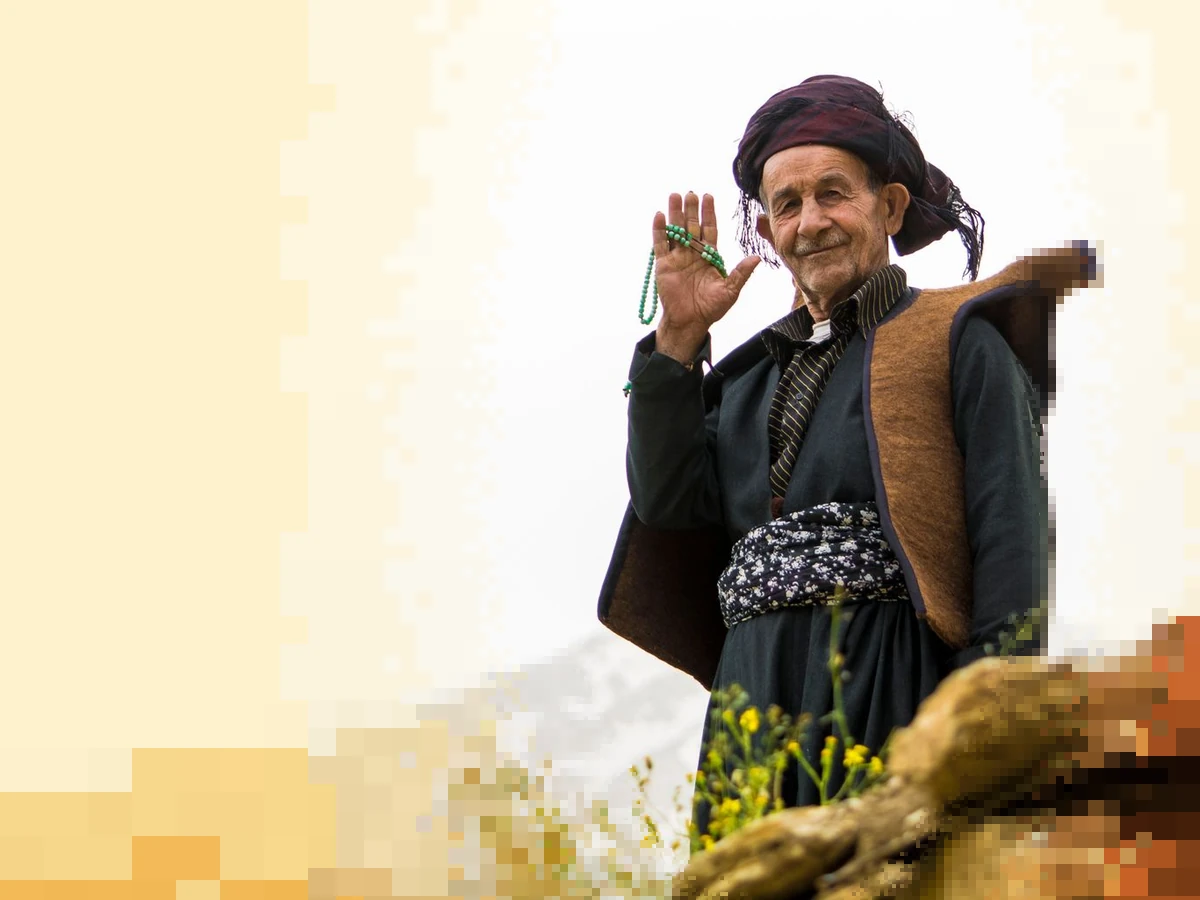
Poetry belongs to the day as well. In 1948 Pîremêrd, a poet from Sulaymaniyah, wrote a poem called Newroz. Set to music and recorded by the singer Hesen Zîrek in the 1960s, it is still played in Kurdish cities when Newroz comes around.
What Newroz means to Kurds
For most families, Newroz is simply the best day of spring: everyone outside, the first green on the hills, a reason to dress up and see the whole family at once.
It is also more than that. Kurds live across several countries, and in some of them public Newroz celebrations were restricted for long periods. Lighting the fire in public, dancing the govend and singing in Kurdish have become a way of saying, calmly and together, that the culture is alive. That is why the legend matters. Kawa is not a king or a general. He is a working man with a hammer, and the fire he lights tells everyone in the mountains that they are not alone.
Greetings and words you will hear
You need very little Kurdish to join in. These are the two greetings you will hear most, Kurmanji first and Sorani under it.
- Newroz pîroz be!نەورۆزتان پیرۆز بێتHappy Newroz!Word for word, “may Newroz be blessed”. The Sorani adds تان, “your”, to say it to a group or politely.
- Cejna we pîroz be!جەژنتان پیرۆز بێتHappy holiday to you!Works for any celebration, not only Newroz. Cejn means feast or holiday.
Around the fire you will also hear the words for the things in front of you. Agir is fire, ئاگر in Sorani. Bihar is spring, بەهار. And çiya, the mountain, چیا, is where the legend says the saved young people hid, and where the torches of Akre still climb every year.
Words from this article
Every word here came up above. Read them out loud once, then test yourself in the full quiz.
| Kurmanji | Sorani | English |
|---|---|---|
| Newroz | نەورۆز | the Kurdish New Year, “new day” |
| nû | نوێ | new |
| roj | ڕۆژ | day, sun |
| agir | ئاگر | fire |
| bihar | بەهار | spring |
| çiya | چیا | mountain |
| cejn | جەژن | feast, holiday |
| pîroz | پیرۆز | blessed, holy |
| govend | هەڵپەڕکێ | Kurdish line dance |
| hesinkar | ئاسنگەر | blacksmith |
| Newroz pîroz be! | نەورۆزتان پیرۆز بێت | Happy Newroz! |